
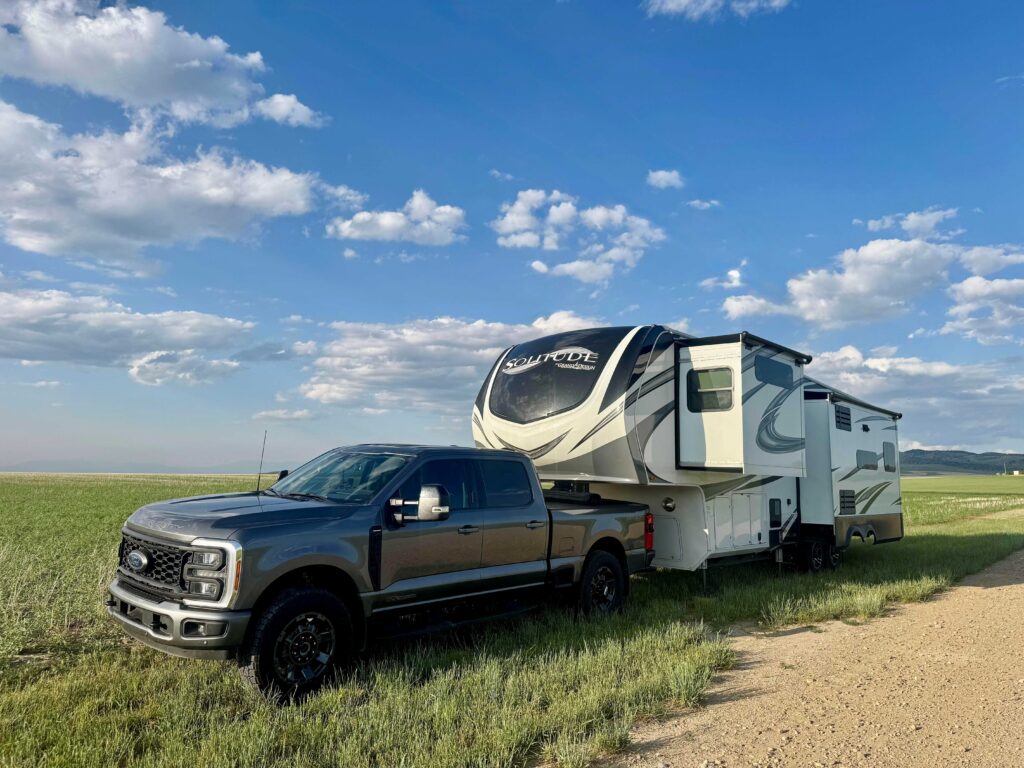
This year we finally made it to the Pacific Northwest, an area that has been high on our “must-see” list for years! We slow traveled the region in our RV, and it was simply incredible.
11,000 miles, 131 nights, three new-to-us states (Washington, Oregon, and Nebraska), and seven national parks… Let’s dig into the details of our RV travel costs after 4.5 months on the road.
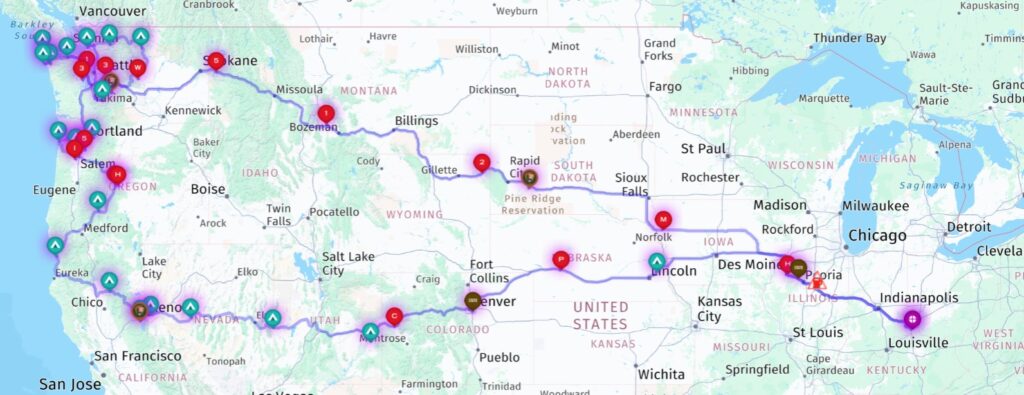
How This Trip is Different Than Last Year
First, it’s worth mentioning our time on the road in 2025 wasn’t a rinse and repeat of 2024. We learned quite a few things from the three months we spent RV traveling last year, and made some intentional changes this time around.
The trip was longer. This was not our first rodeo traveling for an extended period in our RV, but it was our longest, consecutive RV trip to date. We spent 131 days on the road during this trip, compared to 81 days in 2024.
Want to learn how much our 2024 3-month RV trip cost? Click here.
We didn’t have a return date. One of the biggest differences this year was the open-endedness of our trip. When we left on June 11, 2025 we didn’t know when we’d be home (!!). I planned and made reservations through Labor Day. After Labor Day we only had loose ideas for where we’d go from our last planned destination, Tillamook on the Oregon coast.
Why did we leave it open ended? Well, the main reason–we could! But also, we wanted to see how it felt to “wing it” after a certain point, and felt semi-confident in our ability to figure it out. Side note: not knowing where you will park a 35-foot RV to sleep is stressful! We were also curious to see how long we could travel before feeling like it was time to go home, or, that we needed to go home. When would we hit a limit, or would we?
We’ve found once you approach life as a series of “tests” to see what works (and doesn’t) for you–instead of using a success vs. failure filter–the world can really open up and increase your perceived risk tolerance.
We slowed down. Slowing down was very intentional. We spent two months in Washington alone, which meant our drive days were much shorter on average (less than 3-4 hours most travel days in WA). We typically spent 5 to 7 nights in each major location, whereas last year it was more like 3 to 5 nights.
We made this change because our 2024 trip demonstrated how important it was to build in “down” days, especially for Mike.
I’m the crazy, must-see everything, do everything person, especially when it comes to visiting the national parks and hiking. Mike can only take so much back-to-back adventures before he is burnt to a crisp (another sunrise hike, anyone?!). We definitely did better this time around building in down days. We used down days primarily for no-alarm mornings, laundry, grocery shopping, meal planning/prepping, maintaining our strength training routines, RV maintenance, and catching up with friends and family.
Somewhat related, we also learned it’s okay for me to go out and do things while Mike stays back, or vice versa. There were a couple times during this trip I went out for sunset and Mike decided not to go. It’s healthy for each of us to recognize where our limits are, and set boundaries.
We regularly checked in with friends and family. Staying connected with family and friends while traveling can be tough. Will we have reliable internet service?! Then add in a 3-hour time difference…
This year we were more proactive about scheduling catch ups with family and friends, and tried to do primarily video chats. There is something about being able to see people, even if on video, that makes the experience more personable and engaging.
How We Track Expenses
Before I share our 2025 trip expenses, a word first on how we actually track this data. You may be wondering how we can share the details of our expenses and, importantly, the level of accuracy.
We’ve tracked our expenses religiously since we started down the path to Financial Independence in 2019. Our expense tracking system while traveling is similar to how we track day to day at home. It’s pretty simple and works well for us, which is typically the sign of a good system.
When possible we use credit cards for all our expenses (campgrounds, restaurants, groceries, fun, etc.). We have an account with Empower that aggregates our credit card charges, and allows us to categorize our expenses based on our budget line items. We can then pull data based on specific timeframes to review total expenses.
For the ever-optimizing credit card hackers out there, yes, we try to optimize using the “right” credit card based on the rewards available. Mike will often apply for specific cards ahead of time so we can optimize. Pro-tip: label your credit cards to make your life easier!
While 90% of our expenses are captured via credit card, there are some exceptions. The biggest exception is for fuel. Our truck requires diesel instead of gasoline. Because of the overall height (13’6) and length (55 feet) of our truck and trailer, the semi lanes are much safer for us to navigate for fuel stops. Because we use the semi truck lanes, we are able to use a discount fuel card to save on diesel. This however must be linked to a bank account (not a credit card).
And of course, although becoming less common, there are still some places that only accept cash (Neah Bay, Washington fyi!). For cash, we note how much we start out with, and then I jot down what and where we use cash. There is definitely more room for error when tracking cash. At the end of our trip we note how much we have remaining in cash. While we may not have perfect accounting for where it went, we at least know the total spent ($200 for this most recent trip).
To share this data with you, we pull from Empower, our bank statements for the fuel costs, and then looked at our remaining cash (and my notes on what we spent it on). I’d say there is a 2-4% margin of error.
Top Five Expenses after 4.5 Months on the Road
Okay finally, let’s dig into the good stuff!
#1 Biggest Expense: Campgrounds
We spent $6,469 on campgrounds.
This total includes the cost of all the places we stayed: private campgrounds, state parks, National Forest Service land, HipCamp locations, Boondockers Welcome locations, Harvest Hosts, and county parks.
If you are not an RVer, think of hotels as the campground equivalent–lodging. Similar to hotels, typically there are campground options at different price points. Maybe not as many options as you have with hotels, but you get the idea. And of course, some remote areas have less options. In which case, like hotels, you will pay more.
For this trip, our most expensive campground was Mounthaven Resort in Ashford, Washington. We paid $107.80 per night. And honestly it was worth every penny to be within about a mile from the Nisqually entrance to Mount Rainier National Park, which served as our home base to explore the Paradise area of the park.
To help expand our overnight stay options and lower campground costs, we paid for a Harvest Host membership (~$70 per year) and a Good Sam membership (~$50 per year). These were both well worth it for the areas we visited. We especially appreciated our Harvest Hosts and Boondockers Welcome hosts for unique and memorable stays. These two options came in clutch when we needed a safe place to overnight while covering a lot of ground quickly, or when BLM dry camping didn’t work out for us last minute.
Overall we paid on average $48.65 per night for campgrounds, whereas last year we averaged $60 per night.
We also caught some breaks… Like a small refund when our neighbor’s sewer line got backed up and started flowing into our site (insert puke emoji here!). Or, when we arrived to a first come, first serve beach front campground in Neah Bay and someone left early and prepaid a couple of nights for the next person who showed up (us!), saving us $120!
We also worked with some really understanding campground who didn’t charge us fees when they could have for last minute cancellations for some RV repairs we did on the road.
#2 Biggest Expense: Fuel
We spent $4,410 on fuel.
It pains me that our second largest expense is fuel (diesel). But when you tow a 35-foot long box across the country, driving 11,000 miles, what can you expect? As mentioned earlier, we primarily used Open Roads for diesel discounts, and then tried out Mud Flaps towards the end of our trip.
#3 Biggest Expense: Groceries
We spent $3,660 on groceries.
Ouch! We knew generally prices would be higher in the Pacific Northwest, but dang! Overall, I think we know grocery prices are higher everywhere…
While grocery shopping on the road can be stressful since you’re typically going to a new store every time, this is where our down days helped out. Last year we did a lot of grocery shopping during our travel days (while towing). We’d drive for a bit, hit a Walmart or Costco parking lot (stressful to find parking for our rig) to eat lunch, and then I’d go grocery shop and have to put it all away. While efficient, it added an unnecessary layer of stress.
This year we didn’t have many grocery stops while towing and that helped make grocery shopping much less stressful.
We also discovered Winco while in Washington and Oregon. We loved it! Can they expand to the midwest? Anything that helps me save on groceries is a win!
#4 Biggest Expense: Restaurants
We spent $2,767 on restaurants.
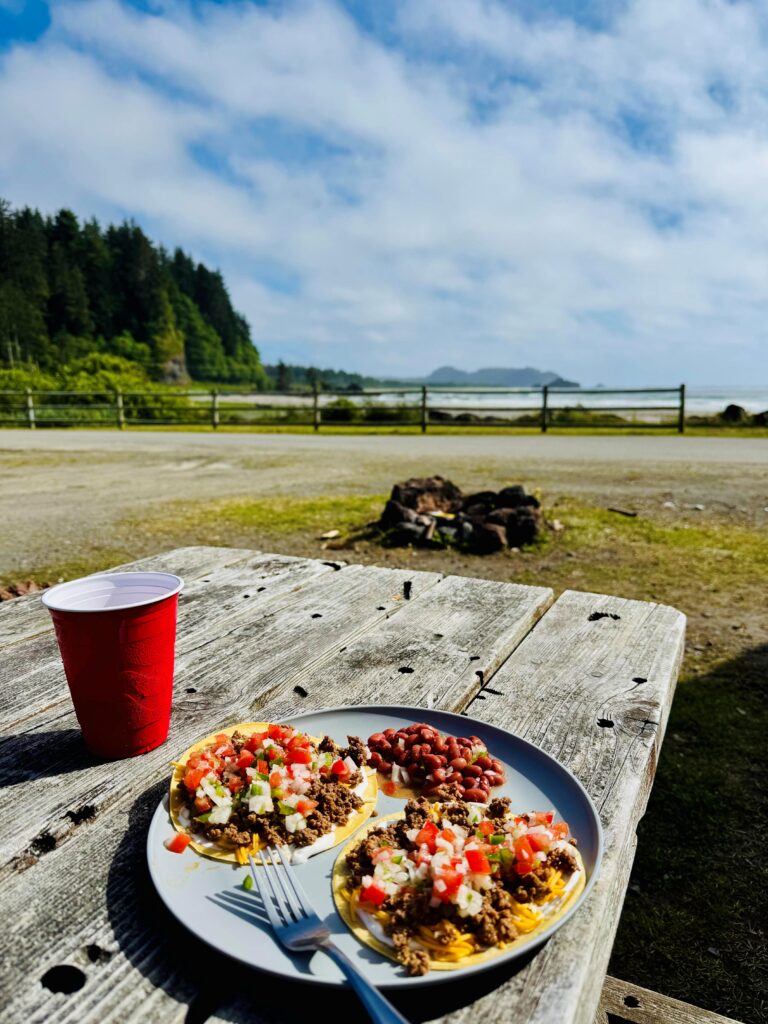
While we enjoy eating out and trying new places, we definitely cooked “in” more this trip.
Similar to our grocery experience, eating out was notably more expensive compared to our mid-west fares. We had several meals where we left, a bit shocked at what we had paid for what we received. After that, we consciously doubled down on cooking in more.
One, it’s cheaper. Two, it’s nice from a health and fitness perspective to know exactly what you are eating and how much. And three, less decision fatigue! Picking from our list of meals is less hassle than trying to decide what we’re in the mood for, how far away it is, etc.
Years ago one of my biggest enjoyments of travel was eating out and trying new food. But for how we travel now, eating out less is well worth the tradeoffs.

#5 Biggest Expense: Fun & Experiences
This year we spent $542 on “fun” and experiences.
Typically the things we enjoy most don’t cost a ton of money–scenic drives, visiting national parks and scenic areas for hiking, walking around cities and towns to take in the sights, etc. Most of the expenses in this category are small admission fees for state and local parks, our annual $80 National park pass, a national park scratch off poster, etc.
We splurged though on a bucket list experience for me, a 4-hour whale watching tour out of Anacortes, Washington ($268 total). As a little kid I was obsessed with marine wildlife: sharks, whales, dolphins, and specifically orcas. It’s been on my bucket list to see wild orcas, and I knew the Washington coast might be a great place to see them.
And, we were in luck that day! After a long cruise out to the Canadian waters of the Straight of Juan de Fuca, we spent 45+ minutes watching pod T-46 (Thor, Strider, Loki, Centecki) from afar. Seeing the orcas was simply amazing–I literally had tears in my eyes as we cruised along, trying to give them space.
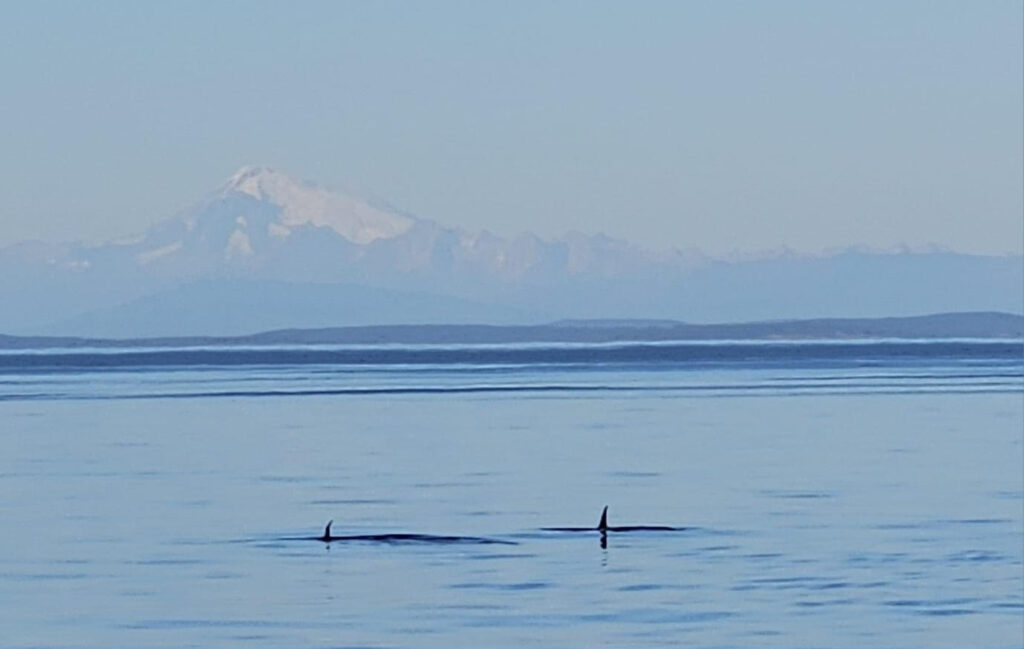
Honorable mention: While I was on the tour 100% to see orcas, we also saw a humpback whale on the return trip.
Grand Total of RV Travel for 4.5 Months
Okay, so those were our top five expenses. Let’s break this down further so you can see the grand total.
| Expense Category | 2025 RV Trip Cost (4.5 months) | 2024 RV Trip Cost (3 months) |
| Campgrounds | $6,469 | $4,806 |
| Fuel | $4,410 | $2,812 |
| Groceries | $3,660 | $1,820 |
| Restaurants | $2,767 | $2,402 |
| Fun/Experiences | $542 | $1,106 |
| Tolls/Fees/Car Washes | $127 | $57 |
| Propane | $134 | $100 |
| General Supplies | $279 | $194 |
| Laundry | $13 | – |
| Internet | $225 | – |
| Cash | $200 | – |
| TOTAL: | $18,826 | $13,298 |
For 4.5 months on the road, we spent nearly $19,000. Our daily average was $144 this year, compared to $166 last year.
It’s interesting that our grocery total essentially doubled, while our restaurant costs were very similar.
What About our House?
One thing to note, this information does not include our regularly occurring bills for our home near Cincinnati: mortgage payment, utility bills, etc. Some of the utility bills were lower since we weren’t home, but they were not zero.
Prior to leaving, we talked about turning off our water service and home internet. Ultimately we decided it wasn’t worth the hassle. We have security cameras that require the internet, plus we also host RVers in our driveway through Boondockers Welcome who often want water.
While turning off utilities didn’t make sense for us, it would be another “lever” to (minimally) decrease our expenses while traveling.
Debriefing on Expenses
We were both anxious to see the total cost of this trip. Once we totaled everything up we took it in, said, “yup, that sounds right,” and honestly quickly moved on.
I don’t mean to be flippant–of course $19,000 is a huge chunk of money.
What allows us to spend this amount of money?
- We know our annual expenses and have years of data to guide our spending decisions. We still have monthly expense reviews to monitor how things are looking throughout the year. We do not budget.
- We are clear on what we value: travel/experiences, health/fitness, and learning are top right now. I will never forget Ramit Sethi describe spending “dials” on a podcast many years ago. His message: dial up spending in areas most important to you; conversely, ruthlessly dial back spending in areas that don’t matter to you. It can take some trial and error to figure this out, but I feel we’ve nailed this concept when it comes to our spending, at least for this phase.
- We know every year will be different when it comes to expenses. That is normal. We also have the data to back that up since we’ve been tracking since 2019. Travel is a huge line item for the last several years, but that hasn’t always been the case. Our best guess is next year’s travel may not be as high due to some other things we have coming up. Tracking has shown us our expenses fluctuate, and that big swings in different categories are completely normal for us.
- We can change our spending. Because we track where our money is going and the extent it is discretionary, we can also slow down spending if or when we need to. We realize extended travel costing $19,000/year while also having the annual holding costs of our house is not sustainable. But, it is doable to a certain extent. Being flexible on spending is an undervalued superpower. While we haven’t been required to cut back, I’m confident we could.
Want help determining your values? Click here for tips on how to openly talk about money and a values exercise.
What’s Next?
Our RV is currently in Northern Indiana for repairs (it’s a saga that just keeps going). In the mean time, we are headed to Florida next week to spend Christmas (how is it December?!) with Mike’s immediate family. Lawd help us, we have to pack suitcases for flying instead of taking our entire house with us!!
Once we return, if all goes as planned, we’re picking up the RV. We’re spending a month at an RV resort in Florida to escape the gray, winter weather here in Cincinnati. Four weeks in one location?! We’ll see how that goes!
I hope you have the best holiday season available to you (if the holidays are your thing).
And, I’d love to hear in the comments or on social media what you’d like to see or hear about in future blog posts.
Other Blog Posts You May Find Interesting:
What a fun adventure! Glad to see the blog is active again! Really appreciate you sharing all the details of your trip, including expenses. One thing that I think is also worth considering when calculating the cost of extensive travel is: what would the costs have been had you never gone on the trip? For example, if you stayed home all summer, you’d still be buying groceries, eating out, some on gas (albeit less), home utility bills would higher, etc. If you factor in some of these costs that you would’ve incurred anyway had you simply stayed home instead, the net “additional” travel expense might only be around $13-14k for the year, instead of $19k. No one ever seems to talk about this when discussing travel, but I think it’s worth considering. And personally, it helps me realize that our vacations aren’t necessarily as expensive as I originally think they are. We still gotta eat no matter what. 🙂
For future posts, I’d love to hear more about what everyday life is like (when at home), what you’re continuing to learn as you get deeper into post-FI life, and what are some experiments you’re excited to try in 2026.
Thanks Stephen! Your points about the cost of living had we not traveled are well made and so true! No one can argue our diesel costs would have been lower, though! 🙂